7 Mistakes You're Making with Your New Hires (and How to Fix Them)
![[HERO] 7 Mistakes You're Making with Your New Hires (and How to Fix Them)](https://cdn.marblism.com/p6Wk9_7_cOU.webp)
You finally did it. After weeks of sorting through resumes, conducting interviews, and checking references, you’ve found the "perfect" candidate. You’re relieved because your team is stretched thin and you desperately need the help. You bring them in on Monday morning, give them a quick tour of the office, point them toward their desk, and hand them a stack of manuals.
Fast forward three months: that "perfect" hire is disengaged, making avoidable errors, or worse: they’ve already handed in their resignation.
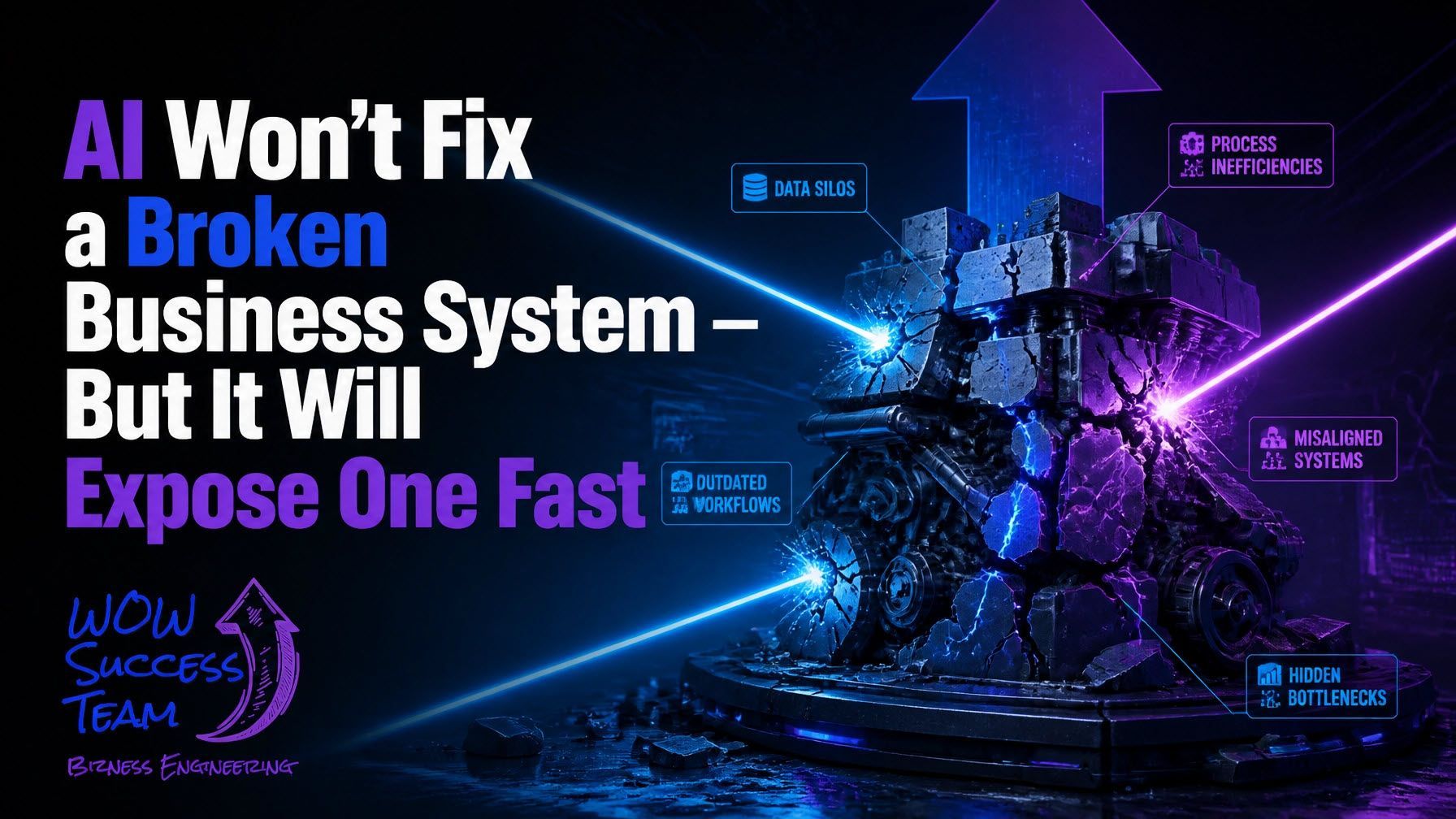
If this sounds familiar, you aren’t alone. Many small to medium business owners fall into the trap of thinking that hiring is the finish line. In reality, the moment an offer is accepted is when the real work begins. At WOWSuccessTeam, we look at HR through the lens of Business Engineering. If your hiring process is a machine, a new employee is a high-performance part. If the machine's housing is cracked or the assembly line is misaligned, even the best part will eventually fail.
Hiring is an investment in your Business Growth. But without the right Hiring Frameworks and HR Systems, you’re essentially throwing money into a leaky bucket. Let’s look at the seven most common mistakes business owners make with new hires and how you can engineer a better solution.
1. The "Wild West" Onboarding (Lacking a Standardized Process)
One of the biggest mistakes is treating onboarding as a "figure it out as you go" experience. When new hires experience vastly different introductions depending on which manager is available or how busy the week is, you create immediate confusion. This inconsistency leads to training gaps and delayed productivity.
The Business Engineering Fix:
You need a standardized onboarding framework. This isn't just a "nice to have": it’s a component of your Operational Efficiency. Create a master checklist that includes every step from the moment the contract is signed to the end of their first 90 days. This should include company policies, technical setups, and introductions to key team members. When the process is automated and documented, it doesn't matter how busy you are; the system ensures the new hire is set up for success.

2. The Day One Paperwork Avalanche
We’ve all seen it: a new hire spends their entire first day sitting in a lonely cubicle filling out tax forms, NDA agreements, and insurance papers. By the time they finish, their brain is fried, and they haven't learned a single thing about why your company is a great place to work.
The Business Engineering Fix:
Shift administrative paperwork to a "pre-boarding" phase. Use digital HR systems to send all necessary forms to the new hire before their start date. This allows them to complete the "boring stuff" in the comfort of their own home. When they walk through your doors on Day One, the focus should be on orientation, vision, and building relationships. You want them to go home after their first day feeling inspired, not exhausted by bureaucracy.
3. Being Vague About Expectations and Responsibilities
Assuming a new hire "just knows" what to do is a recipe for disaster. When responsibilities are vague, employees feel uncertain and hesitant. This lack of clarity is a silent killer of confidence and performance. If they don’t know what "winning" looks like in their role, they will eventually stop trying to win.
The Business Engineering Fix:
Define your performance metrics early. At WOWSuccessTeam, we believe every role should have clear, measurable KPIs (Key Performance Indicators). During the first week, sit down with your new hire to discuss short-term goals and success criteria. How will their work be measured? How does their role support the broader team goals? When expectations are engineered into the job description, accountability becomes natural rather than forced.
4. Implementing Generic "Buddy" Programs
Many businesses try to help by pairing a new hire with a "buddy." The mistake? Assigning whoever is "least busy" or just happened to be standing by the coffee machine. An unsuitable mentor can inadvertently pass on bad habits, negative attitudes, or incorrect information.
The Business Engineering Fix:
Be strategic. Choose mentors who match the new hire’s personality type and possess deep institutional knowledge. A good buddy program should be a bridge to your company culture. Facilitate an introduction even before the first day. This makes the new hire feel welcome and gives them a "safe" person to ask the "silly" questions they might be too intimidated to ask a manager.

5. The "Ghosting" Manager (Not Checking In Regularly)
The "set it and forget it" mentality is dangerous. Many managers assume that if a new hire isn't complaining, everything is fine. In reality, new hires are often anxious about learning new tools and making a good impression. If you don't check in, they may feel isolated and unsupported.
The Business Engineering Fix:
Schedule recurring "Engine Room" check-ins. A hiring manager should check in at the end of the first day, the first week, the first month, and the three-month mark. These don't have to be long, formal meetings. A 15-minute sync to ask, "What’s been your biggest challenge this week?" or "Do you have the tools you need?" can prevent minor frustrations from turning into major resignations.
6. The "Trial by Fire" Fallacy
There is a common belief, especially in fast-paced service industries, that the best way to learn is to be thrown into the deep end. While this might work for a small percentage of people, for most, it leads to burnout and high-stakes errors. Assigning a massive, complex project to someone who hasn't even learned where the files are stored is unfair to the employee and risky for your business.
The Business Engineering Fix:
Build confidence with "low-hanging fruit." Create a realistic 30-, 60-, and 90-day plan. In the first 30 days, focus on Team Training
and internal processes. In the next 30, give them smaller, manageable projects. By day 90, they should be ready for the "fire." This graduated approach ensures they have the foundational knowledge to handle pressure without breaking.
7. Treating Onboarding as a One-Time Event
If your onboarding "ends" after the first week, you’re missing the boat. Integration into a company culture and a complex role takes time. Many employees don't feel fully comfortable or productive until they've been in a role for six months to a year. If support disappears after day seven, you’re leaving your Business Growth to chance.
The Business Engineering Fix:
Extend your onboarding mindset throughout the first year. Continue providing feedback and additional training opportunities. Comprehensive evaluations at regular intervals help the employee see a clear path for advancement within your company. This is a core part of effective HR Systems: treating the employee journey as a continuous cycle of growth rather than a one-off transaction.

Why This Matters for Your Bottom Line
When you fix these seven mistakes, you aren't just being "nice" to new hires. You are protecting your most valuable asset: your time. Every time an employee leaves because of a poor onboarding experience, you lose the thousands of dollars spent on recruiting and the hundreds of hours spent on training.
By applying a Business Engineering approach, you turn your hiring process into a repeatable, scalable system. You move from a state of constant "firefighting" and "re-hiring" to a state of Operational Efficiency where your team can actually grow without you being involved in every single detail.
As Lynn Herkes, our CEO, often says, "You can't build a skyscraper on a cracked foundation." Your team is the foundation of your business. If the way you bring people into that foundation is flawed, the whole structure is at risk.
Key Takeaways for Busy Business Owners
- Systematize Everything: Don't wing it. Build a framework that can be repeated for every hire.
- Prioritize Culture Day One: Get the paperwork out of the way before they start so Day One is about vision.
- Set Clear Benchmarks: If you don't define what success looks like, don't be surprised when they don't achieve it.
- Think Long Term: Onboarding is a 90-day (or longer) process, not a 9-hour one.
- Invest in Training: Proper Team Training pays dividends in the form of reduced errors and higher morale.
Are your current hiring systems holding you back from the growth you know is possible? If you're tired of the revolving door of employees and want to build a team that actually supports your vision, it might be time for a structural audit.
Your business is growing: but are your systems keeping up? Don't let a "good enough" hiring process be the bottleneck that stops your success.
Let's get your team engine running at full capacity.
Book your Get Ready to Grow session here and let’s start engineering your path to a more efficient, scalable business.

If you would like to do a deeper dive to discover how to overcome your growth struggles,
feel free to contact us or schedule an appointment.
Office:
307-206-9978 | Cell/WhatsApp:
808-346-0302
info@wowsuccessteam.com |
https://wowsuccessteam.com